

How to Identify Different Types of Burns
- Amrutha Kothakota
- Feb 7, 2024
- 3 min read

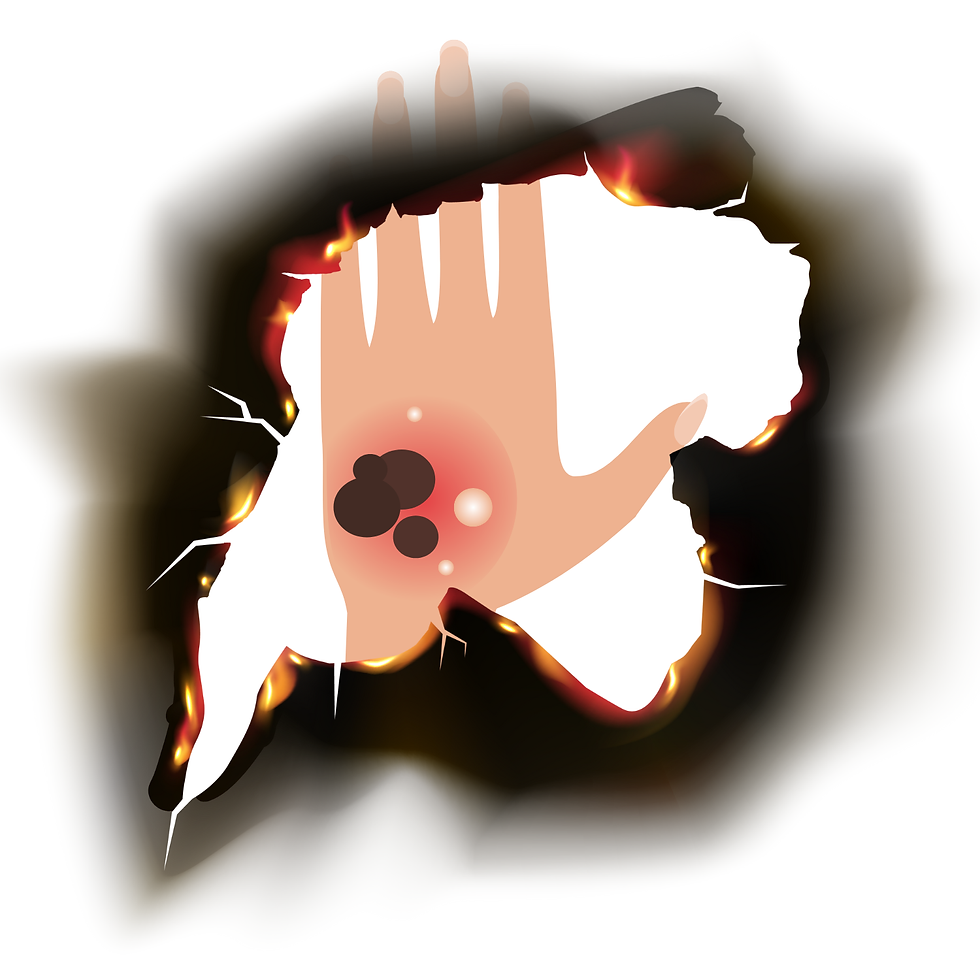
What is a burn?
A burn injury occurs when the body's tissues are harmed by heat, electricity, chemicals, radiation, or friction. The severity of these injuries can differ greatly, influenced by factors like the heat source, its intensity, the duration of exposure, and the specific body area affected. Burn injuries are commonly categorized into various degrees.
Burns can also be categorized by how much of the body is affected. This helps doctors understand how serious the burn is and what treatment is needed. Burn injuries can cause problems like infections, scars, and sometimes shock or organ failure. So, it's really important to get medical help quickly if you're burned.
What are the different types of burns?
Thermal Burns: These injuries arise due to exposure to flames, hot liquids, steam, or other heat sources. Their severity hinges on factors like temperature and duration of exposure.
Electrical Burns: Resulting from contact with electrical currents, these burns can inflict both external and internal damage, including skin burns and injuries to internal organs or tissues.
Chemical Burns: These burns happen when the skin or eyes encounter corrosive substances such as acids, alkalis, solvents, or household cleaning products. They can be severe and necessitate urgent medical attention.
Radiation Burns: Exposure to radiation, like UV radiation from the sun or medical radiation therapy, can lead to burns on the skin or underlying tissues. The severity of radiation burns can vary and may develop gradually over time.
Friction Burns: These injuries occur from rubbing or abrasion against a rough surface, often seen in accidents such as road rash from motorcycle or bicycle incidents, or during contact sports.
Each type of burn necessitates specific treatment approaches, and the severity of the burn determines the appropriate course of action.
How each type of burn looks:
1st Degree: Typically, this burn presents with redness, swelling, and pain. The affected skin may feel dry and mildly irritated, resembling a sunburn.
2nd Degree: These burns are more serious and often exhibit blistering, along with redness, swelling, and pain. The skin may appear wet or weepy due to blister formation.
3rd Degree: The most severe type, characterized by charred or white-colored skin. The affected area may look leathery or waxy and could be numb due to nerve damage.
These descriptions give a general idea of how each degree of burn might appear, but it's important to note that burn injuries can vary widely based on factors such as the cause, duration of exposure, and individual differences in skin sensitivity.
Damage each burns does to skin:
1st Degree: This kind of burn impacts solely the outer layer of the skin, known as the epidermis. It commonly displays redness, swelling, and pain, but typically doesn't extend beyond the surface. Healing typically occurs within a few days without leaving scars.
2nd Degree: These burns reach deeper into the skin, affecting both the epidermis and the underlying layer known as the dermis. They often result in blistering, intense pain, redness, and swelling. While some second-degree burns heal by themselves, more severe cases may necessitate medical attention to prevent infections and ensure proper healing. Deeper second-degree burns can lead to scarring.
3rd Degree: Third-degree burns are the most severe, penetrating through the entire skin thickness and potentially harming underlying tissues such as muscles and nerves. The affected skin may appear charred, white, or leather-like, with potential numbness due to nerve damage. Medical attention is always necessary for third-degree burns, often requiring procedures like skin grafts to promote healing. Scarring is common.
In summary, first-degree burns typically cause mild damage to the skin's outer layer, while second-degree burns affect deeper layers and may lead to blistering and scarring. Third-degree burns cause severe damage to the skin and underlying tissues, often necessitating extensive medical intervention and resulting in significant scarring.
SOURCES CITED:
“Burns and Wounds.” Johns Hopkins Medicine, www.hopkinsmedicine.org/health/conditions-and-diseases/burns. Accessed 6 Feb. 2024.
Professional, Cleveland Clinic medical.“Burns: Types, Symptoms & Treatment.” Cleveland Clinic, my.clevelandclinic.org/health/diseases/12063-burns. Accessed 6 Feb. 2024.
“Classification of Burns.” University of Rochester Medical Center, www.urmc.rochester.edu/encyclopedia/content.aspx?ContentTypeID=90&ContentID=P09575. Accessed 6 Feb. 2024.
“What Are the Types and Degrees of Burns?” WebMD, WebMD, www.webmd.com/first-aid/types-degrees-burns. Accessed 6 Feb. 2024.
“Burns.” World Health Organization, World Health Organization, www.who.int/news-room/fact-sheets/detail/burns#:~:text=A%20burn%20is%20an%20injury,hot%20solids%20(contact%20burns). Accessed 6 Feb. 2024.
Written by: Navya Nagireddy



Comments